Personal note taking and information management
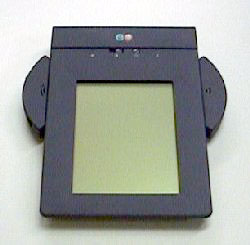 I have been meaning to write a series of posts related to how we use personal information and notes in our daily lives. I have been living and breathing this topic over the last few years, culminating in the development of Ubernote. I don’t even know where to begin with this expansive topic, so I thought that I’d just start writing blog posts, and start to crystallize things along the way. My interest in digital note taking is also being rekindled by having finally gotten a smart phone this year, and by the prospect of a new class of tablet devices that may be on the horizon.
I should preface the following by noting that I’ve always kept notebooks. From the time I was a little kid tinkering with electronics and drawing goofy pictures, I kept a series of notebooks (many of which have regrettably been lost or destroyed and may be a subconscious driver for keeping data in the digital domain). Information means different things to different people, and so it follows that they way that information is recorded, organized, and tracked varies just as widely as people do.
My story of electronic note taking goes something like this: somewhere in high school I got an old laptop from a relative that was really only powerful enough to run old DOS programs. I used the DOS edit command to write notes on this computer. Some examples of things that I would have written here were set lists for the cover band that I was playing in as well as drafts for papers that I wrote in high school. The most critical habit being formed here was a set of text files that I started keeping with todo lists and things that I wanted to buy or keep track of. The format of the text files was basically a tab-indented outline, similar to what the old Mac outliners of the day might have looked like if you were to print the outline to plain text. I don’t recall having used Lotus Agenda at this time, but it would have been something that I wasn’t ready for yet.
In college, I relied on folded-up pieces of paper or small notebooks. This was mostly out of necessity, as I didn’t have a cell phone or laptop. I needed to have ready access to most things, and carrying a floppy around wasn’t going to cut it. I don’t think that USB drives really existed yet at this time. Basically college was the dark ages for me in terms of PIM tools. After graduation I began using a tool called KeyNote (no, not the Mac program of the same name).
Around the same time, I got a Sony Clie. I vaguely recall using several programs such as List Pro and Shadowplan. I’ll have to go back through my notes around this time to figure out exactly what my criteria were for choosing a notes solution, but I think that I was looking for some power-user features. The PDA didn’t quite live up to my expectations in terms of convenience. I was impressed with the handwriting recognition of the Clie, but it was the syncing problem that annoyed me the most. I didn’t want to have to keep syncing the device in order to have the latest versions of my notes. I should point out that the desktop-based solutions had this issue too, since I would need to sync between my different computers at work and home also.
I changed jobs and found myself using Microsoft OneNote since my new employer had a license for Microsoft Office products. I used OneNote for about a year during my time there, and I have quite a number of complaints about it, which I will have to get into later in another post. Somewhere in the time just before I left the company, an intern showed me Evernote. I immediately started using it at home and I ended up dumping my older notes into it pretty much right away. I didn’t start using it yet at work, because my boss had an unreasonable obsession with banning any non-Microsoft tools, so I was afraid to be seen using it at the office.
The shortcomings of Evernote form the basis of my current obsession with note taking software today, which I’ll get into in a future post. Stay tuned, notes junkies.